
Ethnic equestrian performances held to mark Tibetan New Year in Lhasa, China's Xizang
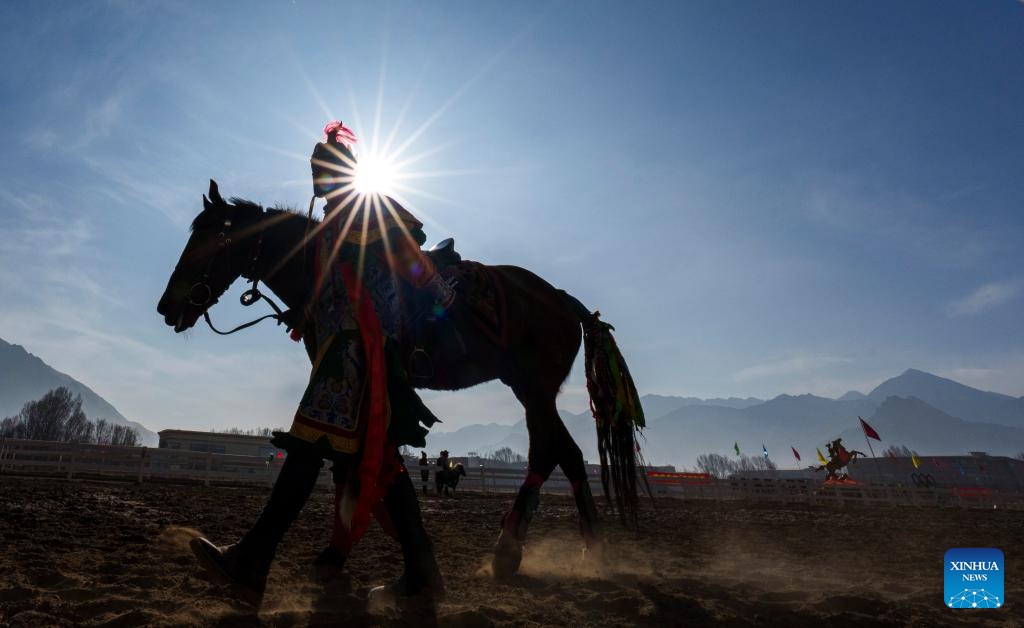
A equestrian performer warms up before the performances in Lhasa,慈慈利新闻网 southwest China's Xizang Autonomous Region, Feb. 20, 2026. Monday was the Chinese New Year's Eve, which was just one day earlier than the Night of Gutu of the Tibetan calendar this year, the prelude to the Tibetan New Year, or Losar, the most important festival in the Tibetan calendar.
Losar is a time for family reunions. It is marked by religious rituals, long prayers, horse racing, family gatherings and feasts.
The city of Lhasa hosted ethnic equestrian performances and horse racing on Friday, the fourth day of the Year of the Horse, and also the third day of the Tibetan New Year, showcasing superb traditional skills and offering visual enjoyment to the audience. (Xinhua/Tenzin Nyida)
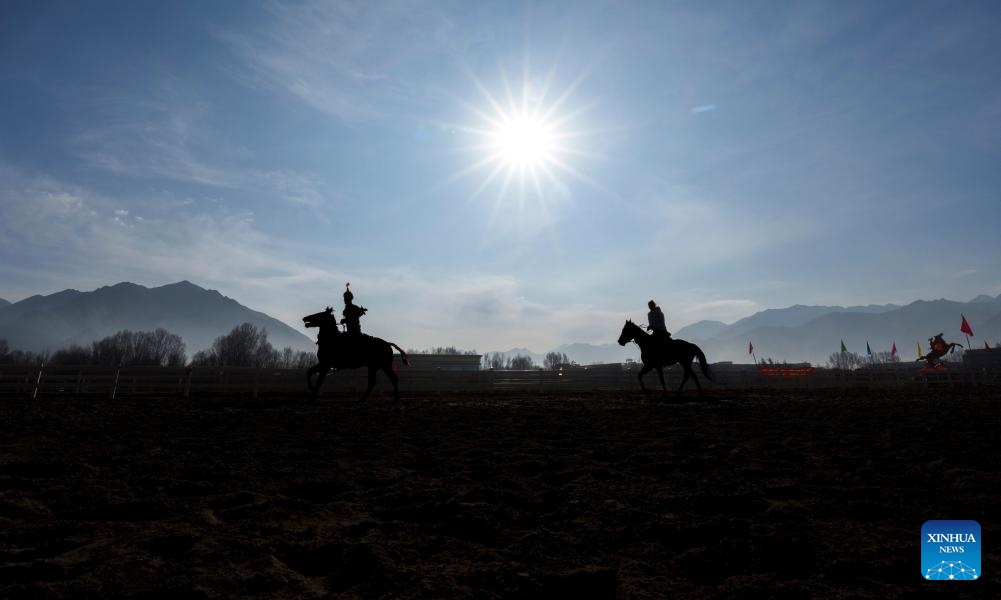
Equestrian performers warm up before the performances in Lhasa, southwest China's Xizang Autonomous Region, Feb. 20, 2026. Monday was the Chinese New Year's Eve, which was just one day earlier than the Night of Gutu of the Tibetan calendar this year, the prelude to the Tibetan New Year, or Losar, the most important festival in the Tibetan calendar.
Losar is a time for family reunions. It is marked by religious rituals, long prayers, horse racing, family gatherings and feasts.
The city of Lhasa hosted ethnic equestrian performances and horse racing on Friday, the fourth day of the Year of the Horse, and also the third day of the Tibetan New Year, showcasing superb traditional skills and offering visual enjoyment to the audience. (Xinhua/Tenzin Nyida)

Horse riders compete during a 2,000-meter race in Lhasa, southwest China's Xizang Autonomous Region, Feb. 20, 2026. Monday was the Chinese New Year's Eve, which was just one day earlier than the Night of Gutu of the Tibetan calendar this year, the prelude to the Tibetan New Year, or Losar, the most important festival in the Tibetan calendar.
Losar is a time for family reunions. It is marked by religious rituals, long prayers, horse racing, family gatherings and feasts.
The city of Lhasa hosted ethnic equestrian performances and horse racing on Friday, the fourth day of the Year of the Horse, and also the third day of the Tibetan New Year, showcasing superb traditional skills and offering visual enjoyment to the audience. (Xinhua/Tenzin Nyida)
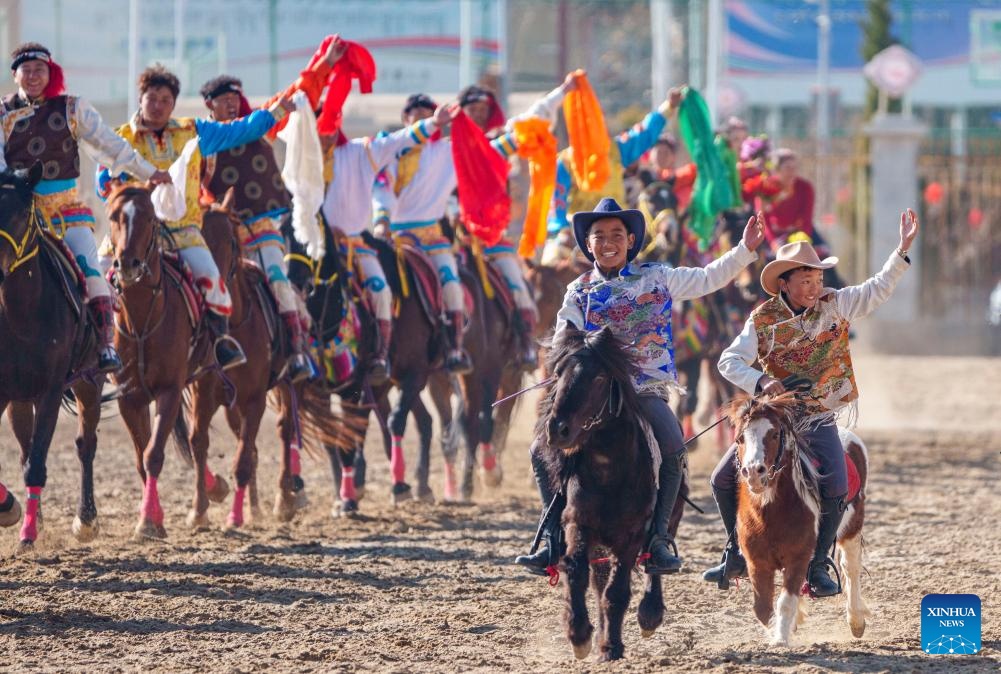
Equestrian performers greet the audience before the performances in Lhasa, southwest China's Xizang Autonomous Region, Feb. 20, 2026. Monday was the Chinese New Year's Eve, which was just one day earlier than the Night of Gutu of the Tibetan calendar this year, the prelude to the Tibetan New Year, or Losar, the most important festival in the Tibetan calendar.
Losar is a time for family reunions. It is marked by religious rituals, long prayers, horse racing, family gatherings and feasts.
The city of Lhasa hosted ethnic equestrian performances and horse racing on Friday, the fourth day of the Year of the Horse, and also the third day of the Tibetan New Year, showcasing superb traditional skills and offering visual enjoyment to the audience. (Xinhua/Tenzin Nyida)

An equestrian performer puts on a show in Lhasa, southwest China's Xizang Autonomous Region, Feb. 20, 2026. Monday was the Chinese New Year's Eve, which was just one day earlier than the Night of Gutu of the Tibetan calendar this year, the prelude to the Tibetan New Year, or Losar, the most important festival in the Tibetan calendar.
Losar is a time for family reunions. It is marked by religious rituals, long prayers, horse racing, family gatherings and feasts.
The city of Lhasa hosted ethnic equestrian performances and horse racing on Friday, the fourth day of the Year of the Horse, and also the third day of the Tibetan New Year, showcasing superb traditional skills and offering visual enjoyment to the audience. (Xinhua/Tenzin Nyida)

An equestrian performer puts on a show in Lhasa, southwest China's Xizang Autonomous Region, Feb. 20, 2026. Monday was the Chinese New Year's Eve, which was just one day earlier than the Night of Gutu of the Tibetan calendar this year, the prelude to the Tibetan New Year, or Losar, the most important festival in the Tibetan calendar.
Losar is a time for family reunions. It is marked by religious rituals, long prayers, horse racing, family gatherings and feasts.
The city of Lhasa hosted ethnic equestrian performances and horse racing on Friday, the fourth day of the Year of the Horse, and also the third day of the Tibetan New Year, showcasing superb traditional skills and offering visual enjoyment to the audience. (Xinhua/Tenzin Nyida)

Equestrian performers put on a show in Lhasa, southwest China's Xizang Autonomous Region, Feb. 20, 2026. Monday was the Chinese New Year's Eve, which was just one day earlier than the Night of Gutu of the Tibetan calendar this year, the prelude to the Tibetan New Year, or Losar, the most important festival in the Tibetan calendar.
Losar is a time for family reunions. It is marked by religious rituals, long prayers, horse racing, family gatherings and feasts.
The city of Lhasa hosted ethnic equestrian performances and horse racing on Friday, the fourth day of the Year of the Horse, and also the third day of the Tibetan New Year, showcasing superb traditional skills and offering visual enjoyment to the audience. (Xinhua/Tenzin Nyida)
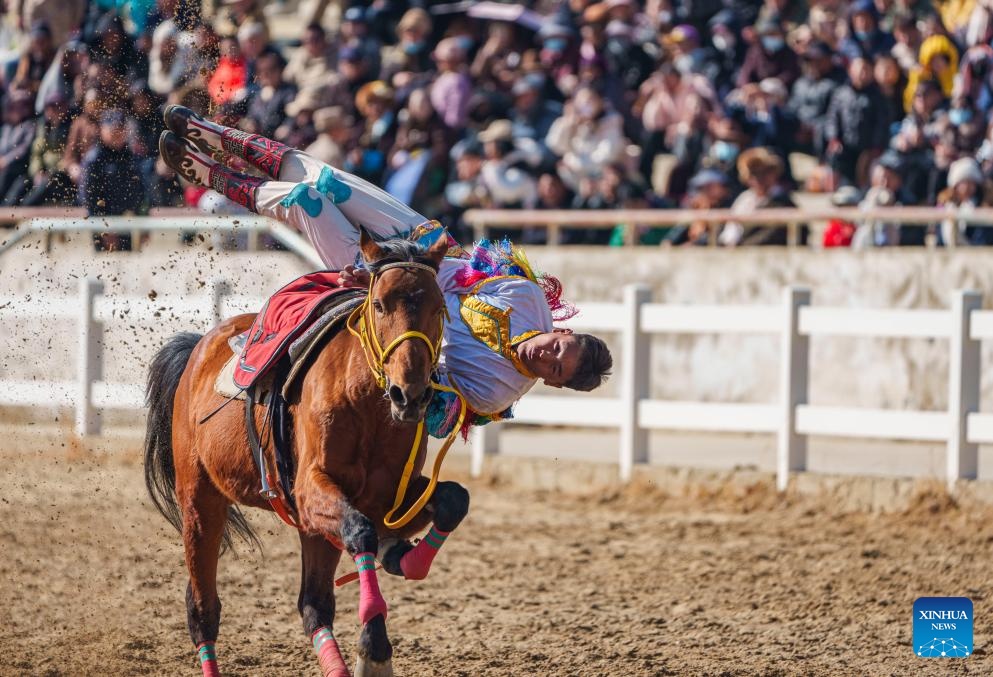
An equestrian performer puts on a show in Lhasa, southwest China's Xizang Autonomous Region, Feb. 20, 2026. Monday was the Chinese New Year's Eve, which was just one day earlier than the Night of Gutu of the Tibetan calendar this year, the prelude to the Tibetan New Year, or Losar, the most important festival in the Tibetan calendar.
Losar is a time for family reunions. It is marked by religious rituals, long prayers, horse racing, family gatherings and feasts.
The city of Lhasa hosted ethnic equestrian performances and horse racing on Friday, the fourth day of the Year of the Horse, and also the third day of the Tibetan New Year, showcasing superb traditional skills and offering visual enjoyment to the audience. (Xinhua/Tenzin Nyida)
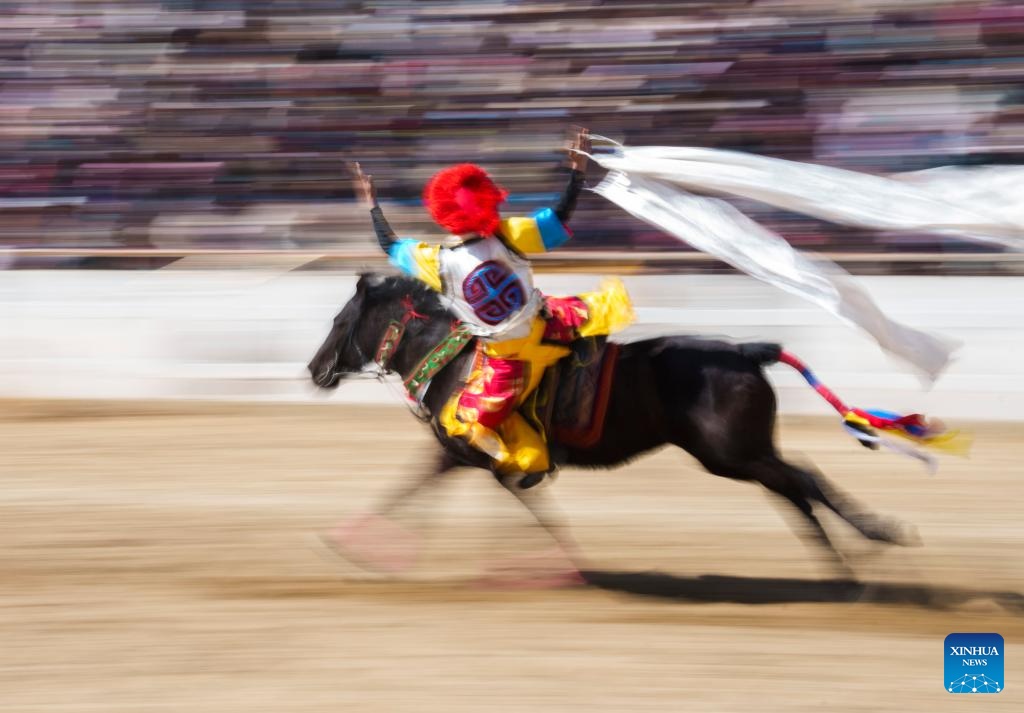
An equestrian performer puts on a show in Lhasa, southwest China's Xizang Autonomous Region, Feb. 20, 2026. Monday was the Chinese New Year's Eve, which was just one day earlier than the Night of Gutu of the Tibetan calendar this year, the prelude to the Tibetan New Year, or Losar, the most important festival in the Tibetan calendar.
Losar is a time for family reunions. It is marked by religious rituals, long prayers, horse racing, family gatherings and feasts.
The city of Lhasa hosted ethnic equestrian performances and horse racing on Friday, the fourth day of the Year of the Horse, and also the third day of the Tibetan New Year, showcasing superb traditional skills and offering visual enjoyment to the audience. (Xinhua/Tenzin Nyida)

An equestrian performer put on a show in Lhasa, southwest China's Xizang Autonomous Region, Feb. 20, 2026. Monday was the Chinese New Year's Eve, which was just one day earlier than the Night of Gutu of the Tibetan calendar this year, the prelude to the Tibetan New Year, or Losar, the most important festival in the Tibetan calendar.
Losar is a time for family reunions. It is marked by religious rituals, long prayers, horse racing, family gatherings and feasts.
The city of Lhasa hosted ethnic equestrian performances and horse racing on Friday, the fourth day of the Year of the Horse, and also the third day of the Tibetan New Year, showcasing superb traditional skills and offering visual enjoyment to the audience. (Xinhua/Tenzin Nyida)
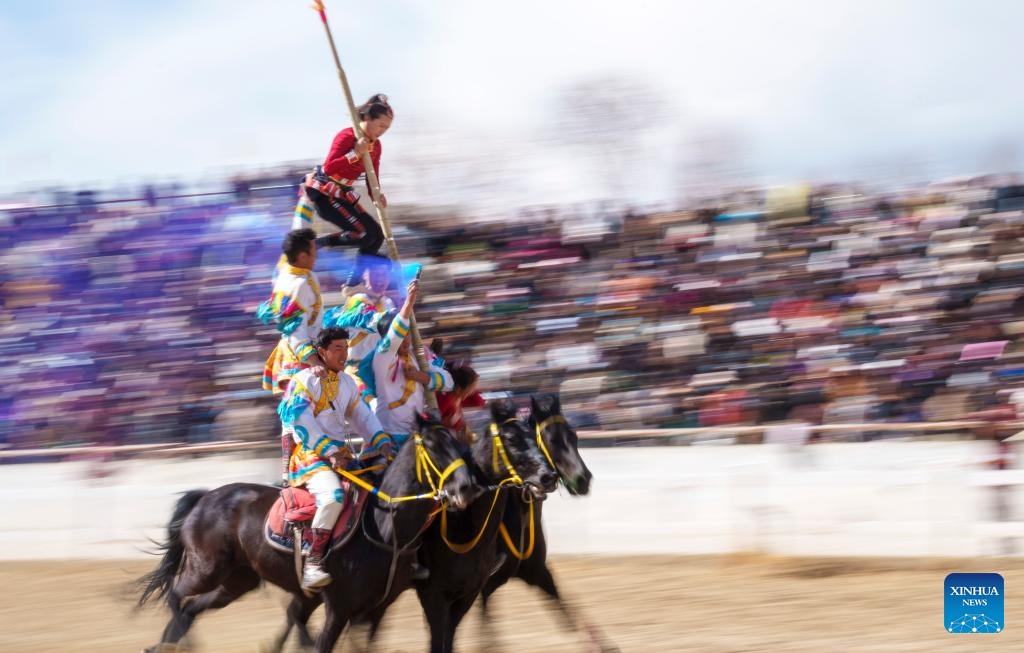
Equestrian performers put on a show in Lhasa, southwest China's Xizang Autonomous Region, Feb. 20, 2026. Monday was the Chinese New Year's Eve, which was just one day earlier than the Night of Gutu of the Tibetan calendar this year, the prelude to the Tibetan New Year, or Losar, the most important festival in the Tibetan calendar.
Losar is a time for family reunions. It is marked by religious rituals, long prayers, horse racing, family gatherings and feasts.
The city of Lhasa hosted ethnic equestrian performances and horse racing on Friday, the fourth day of the Year of the Horse, and also the third day of the Tibetan New Year, showcasing superb traditional skills and offering visual enjoyment to the audience. (Xinhua/Tenzin Nyida)

Equestrian performers greet the audience before the performances in Lhasa, southwest China's Xizang Autonomous Region, Feb. 20, 2026. Monday was the Chinese New Year's Eve, which was just one day earlier than the Night of Gutu of the Tibetan calendar this year, the prelude to the Tibetan New Year, or Losar, the most important festival in the Tibetan calendar.
Losar is a time for family reunions. It is marked by religious rituals, long prayers, horse racing, family gatherings and feasts.
The city of Lhasa hosted ethnic equestrian performances and horse racing on Friday, the fourth day of the Year of the Horse, and also the third day of the Tibetan New Year, showcasing superb traditional skills and offering visual enjoyment to the audience. (Xinhua/Tenzin Nyida)
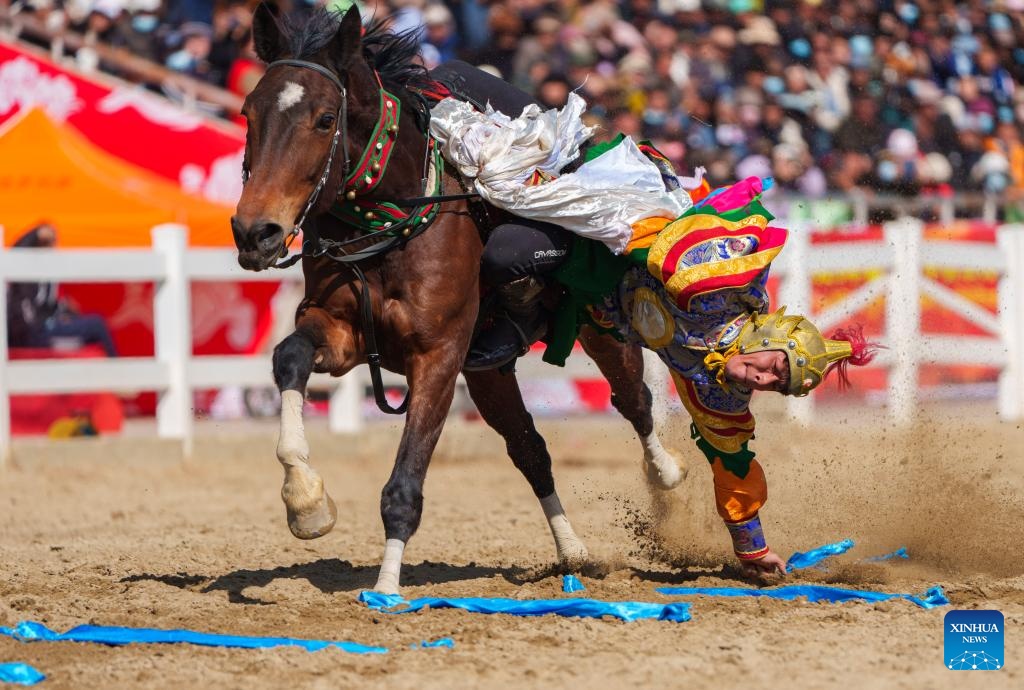
An equestrian performer puts on a show in Lhasa, southwest China's Xizang Autonomous Region, Feb. 20, 2026. Monday was the Chinese New Year's Eve, which was just one day earlier than the Night of Gutu of the Tibetan calendar this year, the prelude to the Tibetan New Year, or Losar, the most important festival in the Tibetan calendar.
Losar is a time for family reunions. It is marked by religious rituals, long prayers, horse racing, family gatherings and feasts.
The city of Lhasa hosted ethnic equestrian performances and horse racing on Friday, the fourth day of the Year of the Horse, and also the third day of the Tibetan New Year, showcasing superb traditional skills and offering visual enjoyment to the audience. (Xinhua/Tenzin Nyida)

Equestrian performers put on a show in Lhasa, southwest China's Xizang Autonomous Region, Feb. 20, 2026. Monday was the Chinese New Year's Eve, which was just one day earlier than the Night of Gutu of the Tibetan calendar this year, the prelude to the Tibetan New Year, or Losar, the most important festival in the Tibetan calendar.
Losar is a time for family reunions. It is marked by religious rituals, long prayers, horse racing, family gatherings and feasts.
The city of Lhasa hosted ethnic equestrian performances and horse racing on Friday, the fourth day of the Year of the Horse, and also the third day of the Tibetan New Year, showcasing superb traditional skills and offering visual enjoyment to the audience. (Xinhua/Tenzin Nyida)

Kids watch the equestrian performances in Lhasa, southwest China's Xizang Autonomous Region, Feb. 20, 2026. Monday was the Chinese New Year's Eve, which was just one day earlier than the Night of Gutu of the Tibetan calendar this year, the prelude to the Tibetan New Year, or Losar, the most important festival in the Tibetan calendar.
Losar is a time for family reunions. It is marked by religious rituals, long prayers, horse racing, family gatherings and feasts.
The city of Lhasa hosted ethnic equestrian performances and horse racing on Friday, the fourth day of the Year of the Horse, and also the third day of the Tibetan New Year, showcasing superb traditional skills and offering visual enjoyment to the audience. (Xinhua/Tenzin Nyida)
相关阅读
- 灵魂词作家许鹏原创歌曲《毒打》:诗与歌的极致缠缚,让每一寸欲望之火彻底湮灭
- 洪天明自认揩油门最大责任人 否认与陈嘉桓绯闻
- 陈嘉桓师傅:起诉陈浩民并索赔 放过马德钟
- 弘扬传统文化 缅怀革命先烈
- 葛杨:“生命的价值在于奉献”
- 原创庐剧大戏今日首演
- “铁公机”迎来送往忙而有序
- 打卡象山石浦 被一碗面“鲜”翻了
- 云南丽江白沙文昌宫推出高考季文化活动
- 《美人天下》赤裸抄袭《越狱》 雷同剧情盘点
- “大学生的难题,小学生秒给答案”,高校回应
- 天气转暖蚊虫蜱虫活跃 专家提醒户外活动需做好防范
- 2026巴基斯坦文化周在成都开幕
- 蔡依林否认男友锦荣与爸妈有矛盾:他们互动很好
- 美伊谈判在即 专家:美国态度反复变化 伊朗立场高度一致
- “大学生的难题,小学生秒给答案”,高校回应
- 安庆市宿松博物馆里“寻春”畅享年味文化
- 亳州:将老街嵌入婚姻的记忆
- 伊朗代表团飞机上,放着这些孩子的照片……
- “铁公机”迎来送往忙而有序